
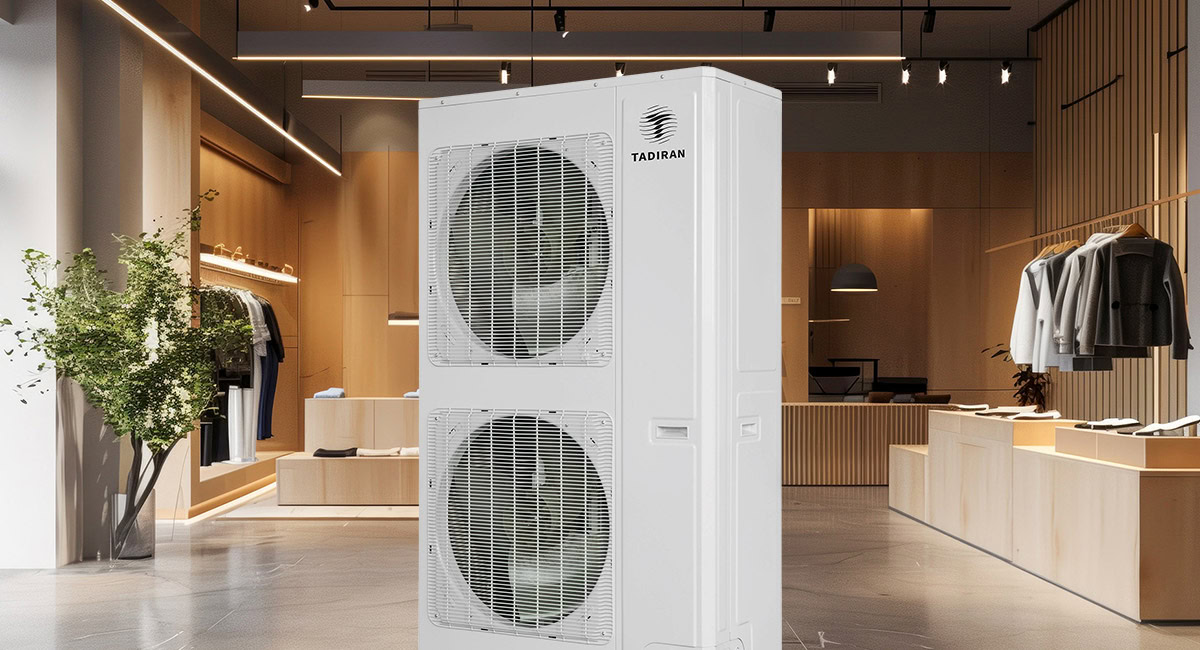
A modular system of up to 4 units, high-efficiency EVI compressors, improved exchangers, and intelligent control for maximum energy efficiency and continuity of service.
Tadiran’s new series of modular VRF outdoor units cover cooling power ratings from 22.4 to 68 kW and allow up to four modules to be combined, offering a scalable and flexible solution for medium to large HVAC systems.
Designed to meet the growing needs for energy efficiency and design flexibility, the new modular VRFs incorporate vapor injection compressors (EVIs) optimized for use at low outdoor temperatures. During the refrigeration cycle, a small amount of refrigerant vapor is injected at an intermediate point in the compression. This “cools” the compressor and increases the mass of circulating refrigerant, allowing the system to work more efficiently. The effects are increased heating performance at low outdoor temperatures, improved energy efficiency, more stable compressor operation, and increased cooling efficiency by up to 10 percent and increased heating capacity at low temperatures by up to 30 percent, ensuring consistent performance even in adverse weather conditions.
The new high-efficiency coil, featuring reduced-pitch corrugated fins and 7-mm tubes, increases heat exchange surface area by 15 percent, improving corrosion resistance and speeding up defrosting operations. The fans have been redesigned according to aerodynamic criteria to increase airflow, reducing noise and pressure drop, with benefits in both acoustic comfort and overall efficiency.
The system also incorporates advanced functions such as intelligent defrosting, refrigerant circuit noise reduction, load self-adaptive control, and intelligent under-cooling management, which ensure stable and efficient operation under all operating conditions. The modular architecture, supported by large-displacement compressors, makes it possible to reduce the number of units needed, increasing the reliability and continuity of plant service. For management and monitoring, Tadiran offers its own remote control system, which enables centralized supervision and continuous control of HVAC systems, facilitating predictive maintenance and energy optimization.